
Posted in George H. Thompson, Real Estate
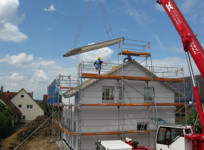 If you are hiring a contractor to build a house for you or hiring a contractor to perform repairs or construct an addition to your existing house, you should insist on a written warranty from the contractor. Many times, this important requirement is overlooked in the home construction area whereas we all expect a written warranty when we buy a car. If you have questions about the terms of the written warranty requested, you should seek legal advice. If, however, you find yourself in the position of having hired a contractor to build a house or to make repairs or additions to your existing house and you did not obtain a written warranty as part of the transaction, you may be able to rely on the implied warranty of workmanlike quality.
Implied warranties are different from written or express warranties because their existence comes from New Hampshire Supreme Court decisions as opposed to New Hampshire legislative statutes. So, implied warranties are not created by an agreement between the parties, but are imposed by law on the basis of public policy. The homeowner in these situations has the burden to show that the defect was caused by the contractor’s workmanship and the contractor can raise his or her own defenses to the homeowner’s claims. If the contractor can show that he is not responsible for the defects, that the defects are the result of age or ordinary wear and tear, or that his or her work was altered by a third party, then the contractor may not be liable to the homeowner. The implied warranty of workmanlike quality requires that the work be performed in a workmanlike manner, in accordance with accepted standards, with the customary standard of skill and care. So, always try to get a written warranty when you hire a contractor to build, repair, or add an addition to your home. But, if there is no written or express warranty, you may still be able to rely on the implied warranty of workmanlike quality.
Author George H. Thompson, Jr.
Welts, White & Fontaine, P.C. has several attorneys available to assist clients when things go wrong with home construction, repair, or addition. Please contact us by calling (603) 883-0797 or using the form at the foot of this page if you think we can be of service. Welts, White & Fontaine is Nashua’s largest law firm and serves the legal needs of both individuals and businesses in towns such as Amherst, Milford, Hudson, Brookline, Windham, Hollis, Merrimack, Litchfield, Bedford, Londonderry, Pelham, and of course Nashua.
This blog is intended for informational use only. The information contained herein should not be construed as offering legal advice or a legal opinion.